
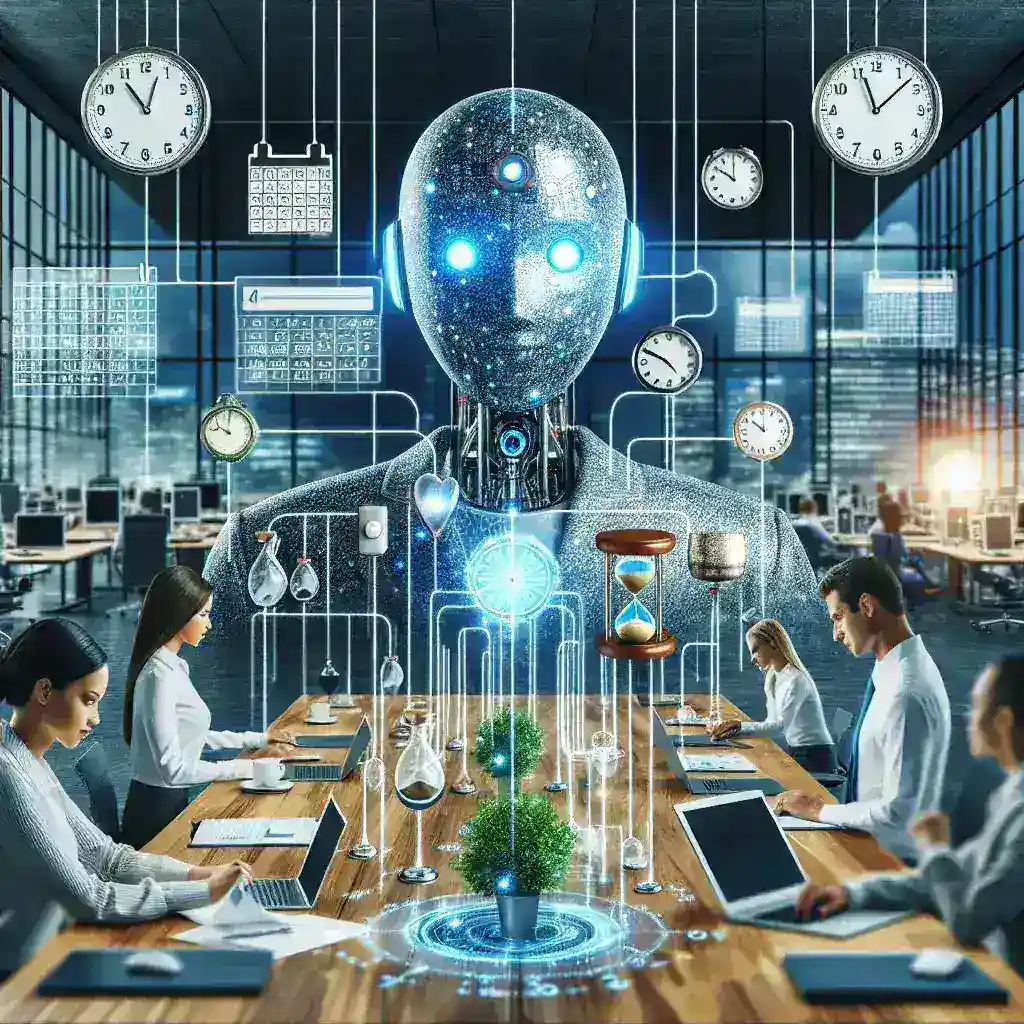
The Dawn of Intelligent Scheduling: How AI is Reshaping Professional Time Management
In the rapidly evolving landscape of modern business, AI-enhanced meeting scheduling assistants have emerged as revolutionary tools that are fundamentally transforming how professionals manage their time and coordinate collaborative efforts. These sophisticated digital companions represent a paradigm shift from traditional calendar management, offering unprecedented levels of automation, intelligence, and efficiency that were once considered the realm of science fiction.
The contemporary workplace presents unique challenges that demand innovative solutions. Professionals juggle multiple projects, coordinate across different time zones, and navigate complex scheduling requirements that can consume hours of productive time each week. Enter artificial intelligence – a technology that promises to liberate us from the mundane yet critical task of scheduling optimization.
Understanding the Technological Foundation
AI-enhanced meeting scheduling assistants operate on sophisticated algorithms that combine machine learning, natural language processing, and predictive analytics to create seamless scheduling experiences. These systems analyze patterns in communication, understand context from email exchanges, and learn individual preferences to make intelligent scheduling decisions without human intervention.
The underlying technology encompasses several key components that work in harmony to deliver exceptional results. Natural language processing enables these assistants to interpret scheduling requests from emails, messages, or voice commands with remarkable accuracy. Machine learning algorithms continuously refine their understanding of user preferences, meeting priorities, and optimal scheduling patterns based on historical data and user feedback.
Core Functionalities That Drive Efficiency
Modern AI scheduling assistants offer a comprehensive suite of features designed to eliminate the friction traditionally associated with meeting coordination. These intelligent systems can automatically scan multiple calendars, identify optimal meeting times, send invitations, and even reschedule conflicts when priorities change.
One of the most compelling aspects of these tools is their ability to handle complex scheduling scenarios that would typically require extensive back-and-forth communication. For instance, when organizing a meeting with participants across different time zones, the AI can automatically calculate optimal times that minimize inconvenience for all parties while considering individual work schedules and preferences.
- Automated calendar synchronization across multiple platforms and devices
- Intelligent conflict resolution with priority-based rescheduling
- Multi-timezone coordination with optimal time selection
- Integration with video conferencing platforms and room booking systems
- Personalized scheduling preferences and meeting type categorization
- Predictive scheduling based on historical patterns and preferences
The Human Element: Enhancing Rather Than Replacing
Despite their advanced capabilities, AI scheduling assistants are designed to augment human decision-making rather than replace it entirely. The most effective implementations maintain a delicate balance between automation and human oversight, ensuring that important nuances and relationship dynamics are preserved in the scheduling process.
Professional relationships often involve subtle considerations that require human judgment. An experienced executive might prefer to personally reach out to a key client for an important meeting, or a team leader might want to consider team dynamics when scheduling collaborative sessions. AI assistants excel at handling routine scheduling tasks while escalating complex or sensitive situations to human attention.
Industry Applications and Real-World Impact
The adoption of AI-enhanced scheduling assistants spans across diverse industries, each benefiting from tailored applications that address specific sector needs. In healthcare, these systems help medical professionals optimize patient appointment scheduling while considering treatment requirements and physician availability. Legal firms utilize AI scheduling to coordinate complex case meetings involving multiple stakeholders and jurisdictions.
Technology companies have been early adopters, leveraging these tools to manage the intricate scheduling demands of agile development cycles, cross-functional team meetings, and client presentations. The consulting industry has found particular value in AI scheduling assistants’ ability to optimize billable hour allocation and client meeting coordination.
Measurable Benefits and Performance Metrics
Organizations implementing AI-enhanced scheduling assistants report significant improvements in various productivity metrics. Studies indicate that professionals can reclaim an average of 3-5 hours per week previously spent on scheduling-related activities. This time savings translates directly into increased focus on core business activities and strategic initiatives.
Beyond time savings, these systems contribute to improved meeting quality by ensuring optimal scheduling that considers participant availability, energy levels, and workload distribution. The reduction in scheduling conflicts and last-minute changes creates a more stable and predictable work environment that benefits overall team productivity.
Integration Challenges and Solutions
While the benefits of AI scheduling assistants are compelling, successful implementation requires careful consideration of integration challenges. Legacy calendar systems, diverse communication platforms, and varying organizational policies can create complexity that must be addressed through thoughtful planning and phased deployment strategies.
Security and privacy considerations represent another critical aspect of implementation. Organizations must ensure that AI scheduling assistants comply with data protection regulations and maintain appropriate access controls for sensitive calendar information. The most successful deployments involve comprehensive security audits and clear governance policies that define acceptable use and data handling practices.
Future Innovations and Emerging Trends
The future of AI-enhanced meeting scheduling promises even more sophisticated capabilities that will further revolutionize workplace coordination. Emerging technologies such as advanced natural language understanding, emotional intelligence recognition, and predictive behavioral modeling will enable these assistants to make increasingly nuanced scheduling decisions.
Integration with Internet of Things (IoT) devices and smart office systems will create holistic scheduling experiences that consider factors such as room occupancy, equipment availability, and environmental conditions. Imagine scheduling assistants that automatically book the optimal conference room based on meeting requirements, participant preferences, and real-time availability of presentation equipment.
Best Practices for Implementation Success
Organizations considering the adoption of AI scheduling assistants should approach implementation with a strategic mindset that prioritizes user adoption and gradual integration. Successful deployments typically begin with pilot programs involving tech-savvy early adopters who can provide valuable feedback and serve as internal champions for broader adoption.
Training and change management represent crucial elements of successful implementation. Even the most intuitive AI scheduling assistants require users to understand their capabilities and learn new workflows. Comprehensive training programs that demonstrate practical benefits and address common concerns can significantly accelerate adoption rates.
Measuring Return on Investment
The value proposition of AI-enhanced scheduling assistants extends beyond simple time savings to encompass broader organizational benefits that can be challenging to quantify but are nonetheless significant. Improved employee satisfaction, reduced stress from scheduling conflicts, and enhanced work-life balance contribute to overall organizational health and productivity.
Organizations should establish clear metrics for measuring the success of their AI scheduling assistant implementations. These metrics might include time saved per employee, reduction in scheduling conflicts, improvement in meeting attendance rates, and overall user satisfaction scores. Regular assessment of these metrics enables continuous optimization and demonstrates the tangible value of the investment.
Conclusion: Embracing the Intelligent Future of Workplace Coordination
AI-enhanced meeting scheduling assistants represent more than just technological innovation – they embody a fundamental shift toward more intelligent, efficient, and human-centered workplace experiences. As these systems continue to evolve and mature, they will undoubtedly become indispensable tools for organizations seeking to optimize productivity and enhance employee satisfaction.
The journey toward widespread adoption of AI scheduling assistants is still in its early stages, but the trajectory is clear. Organizations that embrace these technologies today will be better positioned to navigate the increasingly complex demands of modern business coordination. By thoughtfully implementing AI-enhanced scheduling solutions, businesses can create more efficient, productive, and enjoyable work environments that benefit everyone involved.
The future of workplace productivity lies in the intelligent integration of human creativity and artificial intelligence capabilities. AI-enhanced meeting scheduling assistants provide a compelling example of how this integration can create value that exceeds the sum of its parts, delivering benefits that transform not just how we schedule meetings, but how we think about time, productivity, and professional collaboration in the digital age.